
MENU

MENU

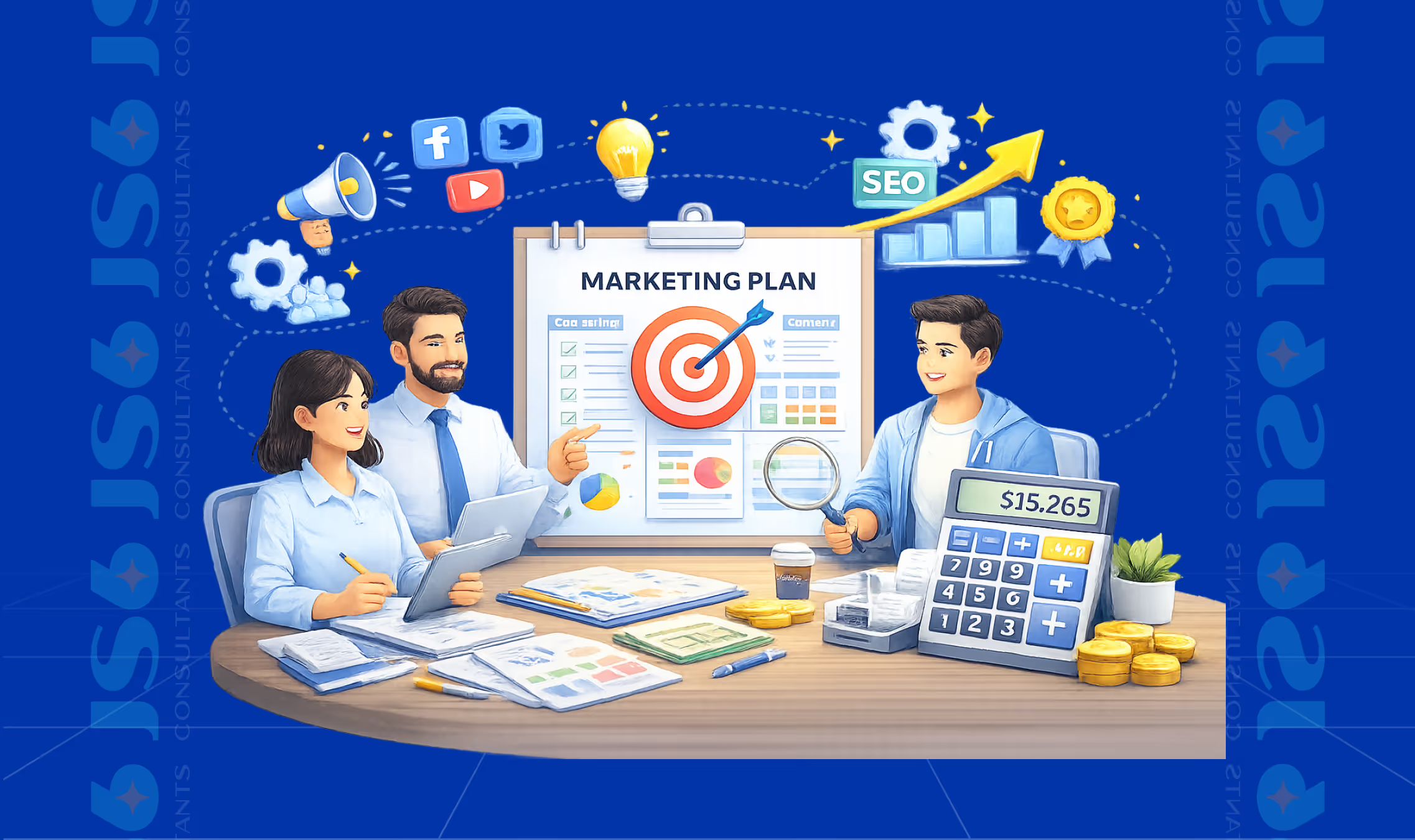
In the rapidly evolving business landscape, a one-size-fits-all approach to marketing is often inadequate. Businesses need a strategy that speaks directly to their unique goals, values, and market realities. This is where custom-tailored marketing plans become not just beneficial, but essential. Unlike generic strategies, which often fail to address the nuances of a business's specific needs, custom-tailored plans offer targeted solutions that align perfectly with the brand’s vision. In this article, we explore why custom-tailored marketing plans are a cornerstone of business success, diving into their components, benefits, and steps to create an effective one.
A custom-tailored marketing plan is a strategic document that is uniquely designed for a specific business. Unlike generic marketing plans that offer a broad approach, these plans are crafted to meet the particular needs of a business, considering its target audience, objectives, and market environment. The core of a tailored plan is to ensure that every marketing activity is aligned with the company's goals and resonates with its customers. For instance, JS6 Consultants, with its focus on task-specific expertise and customized teams, would create a marketing plan that directly addresses its client's needs for efficiency and tailored solutions.
A well-rounded, custom-tailored marketing plan consists of several critical components:
Unlike a generic marketing plan, which uses a broad approach suitable for any business, a custom-tailored plan is specifically designed to meet the unique needs and challenges of a particular business. While a generic plan may provide a general roadmap for marketing, a custom plan dives deeper, addressing the specific target audience, competitive landscape, and strategic goals of the business. Furthermore, a generic plan often lacks flexibility and fails to account for changes in market dynamics or shifts in business objectives.
A custom-tailored marketing plan ensures that marketing activities are directly aligned with the overarching business objectives. Whether the goal is to increase brand awareness, drive sales, or foster customer loyalty, a personalized plan helps keep marketing efforts on track, ensuring all actions contribute toward achieving these objectives. For JS6, whose focus is on providing task-specific expertise, a custom marketing plan ensures all campaigns are aligned with client goals.
Effective marketing begins with understanding and addressing the right audience. A tailored marketing plan uses in-depth audience insights to develop personalized campaigns that resonate with the intended demographic. By targeting the right people with the right message, businesses can increase engagement and reduce wasted marketing spend.
Tailored marketing plans are efficient because they focus efforts on strategies and tactics that have been proven to work for a particular business and audience. This reduces the chances of wasted efforts on irrelevant or ineffective activities, thereby improving return on investment (ROI). With clear goals, budget allocation, and performance metrics, businesses like JS6 Consultants can maximize the effectiveness of every marketing dollar spent.
The business landscape is constantly evolving, and companies need to be able to pivot quickly. Custom-tailored marketing plans allow businesses to adapt to market trends, customer preferences, and competitive threats. Regular reviews and data-driven adjustments ensure that the marketing strategy remains relevant and effective, even as conditions change.
In today’s crowded marketplace, standing out is critical. A custom marketing plan provides a distinct competitive advantage by helping businesses craft unique value propositions and leverage marketing tactics that set them apart from competitors. Customization allows for the introduction of innovative solutions that speak directly to the market’s unmet needs.
Creating a custom-tailored marketing plan requires strategic thinking and in-depth analysis. Here’s how businesses like JS6 can go about it:
Before diving into any marketing activities, it’s crucial to define clear, measurable business objectives. What does the business hope to achieve in the short and long term? Are the goals focused on increasing market share, enhancing customer loyalty, or expanding into new markets? Having a clear understanding of business goals will guide the marketing strategies.
A deep understanding of the target audience is the foundation of any marketing strategy. Businesses must analyze their audience’s demographics, behaviors, interests, and pain points. This helps craft messages and campaigns that resonate with the audience and drive action.
Choosing the right marketing channels is essential to reach the target audience. Whether it’s digital marketing (social media, SEO, email marketing) or traditional methods (TV, print), the selected channels should align with where the target audience spends their time. A custom marketing plan ensures that marketing efforts are focused on the most effective channels for reaching the audience.
Content plays a significant role in marketing success. A content strategy outlines what types of content will be created, when it will be published, and how it will be distributed. Content should reflect the brand’s voice, address customer needs, and align with business objectives.
Establishing performance metrics and KPIs is essential to gauge the success of marketing activities. These metrics should align with the business objectives, such as measuring website traffic, conversion rates, customer engagement, or sales growth. A tailored marketing plan allows businesses to track progress and make adjustments based on data.
One of the biggest challenges businesses face without a tailored marketing plan is generic messaging. Generic messaging fails to connect with customers on a deeper level because it doesn’t address their specific needs, desires, or pain points. This can lead to disengagement and missed opportunities.
Without a strategic, custom plan, businesses may miss out on opportunities to engage with their audience effectively. Marketing activities might not be targeted properly, leading to lower levels of customer interaction and satisfaction. A lack of personalization in marketing reduces the chances of building lasting relationships with customers.
A generic marketing plan often leads to the inefficient allocation of resources. Marketing efforts may be spread too thin, focusing on strategies that don’t yield high returns. Custom plans ensure that resources are allocated toward the most effective activities, improving overall marketing efficiency.
Without a personalized approach, conversion rates can suffer. Generic campaigns are often less compelling because they fail to speak directly to the specific needs and motivations of potential customers. Tailored marketing, on the other hand, leads to higher conversion rates by delivering the right message to the right audience at the right time.


