
MENU

MENU

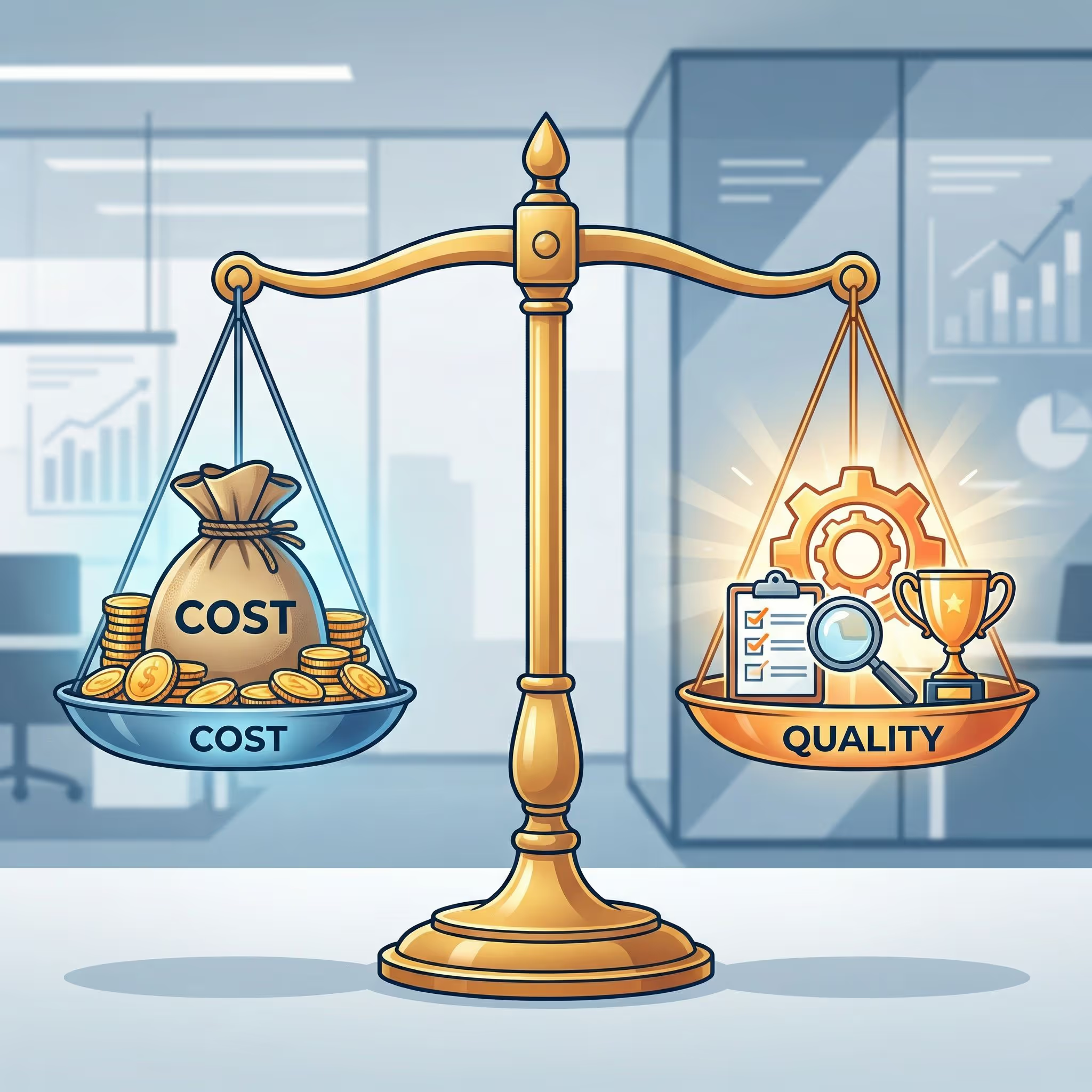
Every organization confronts a persistent operational challenge: how to reduce operational expenses while maintaining consistent service or product standards. Executives, operations managers, and business owners frequently question whether financial efficiency and high standards can coexist within the same system. The reality proves more complex than a simple cost-cutting exercise.
Cost reduction initiatives often promise short-term financial improvement. However, when organizations implement aggressive cost controls without careful planning, they risk weakening operational reliability, employee performance, and customer satisfaction. These outcomes lead to lost revenue opportunities, service disruptions, and long-term reputation damage.
Successful organizations rarely rely on basic cost reduction. Instead, they prioritize operational discipline, structured decision-making, and intelligent resource allocation. Strategic efficiency replaces simple cost cutting as the guiding principle.
Achieving balance requires an operational model where quality strengthens while expenses remain controlled. When organizations design processes carefully, build skilled teams, and apply technology strategically, they achieve consistent results across both financial performance and service delivery.
Business leaders therefore need a clear framework to answer a central question: How to Balance Cost and Quality in Your Business Operations?
Understanding this balance begins with recognizing the impact operational choices have on customers, employees, and financial sustainability.
Balancing cost and quality influences nearly every operational outcome within an organization. Leaders who ignore this relationship expose their companies to inefficiencies that affect productivity, financial performance, and customer retention.
Organizations often discover that cost decisions influence more than financial statements. Operational reliability, employee motivation, and brand perception depend heavily on how companies manage expenses while maintaining performance standards.
Maintaining balance protects organizations from long-term operational risks while allowing them to scale sustainably.
Customers expect reliability, consistency, and value. When businesses compromise quality to reduce expenses, customers notice quickly. The consequences emerge through complaints, service disruptions, and declining trust.
Consider the following effects of reduced quality:
Customer dissatisfaction rarely remains isolated. One poor experience influences many purchasing decisions. Businesses that fail to maintain operational standards often face declining customer retention.
High quality, on the other hand, strengthens long-term relationships. Customers remain loyal to companies that provide consistent experiences. Loyalty increases lifetime value and lowers acquisition costs.
Maintaining quality standards therefore protects revenue streams while supporting stable growth.
Operational efficiency depends on structured processes and accurate execution. When organizations reduce resources without improving workflows, inefficiencies increase rapidly.
Poorly designed processes often generate hidden costs such as:
These issues create additional operational pressure. Employees spend time correcting mistakes rather than performing productive tasks.
Organizations that manage costs carefully while maintaining strong processes eliminate many inefficiencies before they appear. Structured systems allow teams to work efficiently without sacrificing quality.
Operational efficiency therefore emerges not from aggressive cost reduction, but from disciplined process design.
Short-term savings sometimes appear attractive. However, businesses that prioritize cost reduction alone often experience long-term consequences.
Common outcomes include:
Employee performance also suffers when organizations reduce resources without improving operational structure. Teams struggle to meet expectations when systems lack support.
Long-term profitability requires operational reliability. Companies that maintain both financial discipline and quality standards sustain stable growth over time.
Understanding these dynamics helps leaders approach operational decisions more strategically.
Organizations rarely fail because they lack ambition. Most operational challenges emerge from misaligned decisions or incomplete planning.
Understanding the common operational mistakes businesses make helps prevent long-term inefficiencies.
Many companies attempt to improve financial performance quickly without addressing underlying operational structures.
Reducing operational expenses without evaluating workflows creates structural problems.
Companies often reduce staff, budgets, or resources without addressing inefficient processes. As a result, remaining employees must perform additional responsibilities within the same operational systems.
This approach rarely improves performance. Instead, it increases operational pressure and reduces productivity.
Strategic cost management requires understanding where expenses originate. Leaders must examine operational processes before reducing resources.
Organizations frequently focus on lowering expenses rather than improving efficiency.
However, operational inefficiencies often represent the largest source of unnecessary costs. When processes remain outdated or poorly structured, expenses increase regardless of workforce size.
Examples include:
Improving workflows often produces greater savings than workforce reductions.
Process optimization therefore represents one of the most reliable ways to manage costs without sacrificing performance.
Budget limitations sometimes encourage businesses to select inexpensive solutions without considering long-term implications.
Low-cost technology platforms, suppliers, or service providers may appear financially attractive initially. However, inadequate systems often generate additional operational expenses.
Common issues include:
These complications reduce productivity and require additional resources to resolve.
Organizations benefit more from solutions that support operational stability rather than minimal upfront costs.
Employee capability directly influences both operational cost and quality performance.
Organizations that rely on undertrained or inexperienced teams often experience operational errors. These errors require additional resources to correct.
Consequences may include:
A skilled workforce reduces operational risk and improves productivity.
Investing in capable professionals therefore represents a cost-control strategy rather than an expense increase.
Balancing cost and quality requires structured strategies rather than isolated initiatives. Businesses that develop disciplined operational systems achieve consistent results across financial performance and service delivery.
Organizations must combine process management, workforce expertise, and technology to create sustainable operations.
Several operational strategies help leaders manage this balance effectively.
Efficient processes reduce operational waste while maintaining performance standards. Organizations that analyze workflows identify areas where resources remain underutilized.
Process improvement typically begins with workflow mapping. Leaders examine how tasks move across departments and identify unnecessary steps.
Effective process optimization includes:
For example, automating billing systems reduces administrative workload while improving financial accuracy.
Process improvements strengthen productivity without increasing operational pressure.
Operational complexity continues to increase across industries. Businesses benefit from teams that possess specialized expertise in specific functions.
Instead of expanding general workforce capacity, organizations increasingly rely on task-specific specialists.
These professionals deliver measurable benefits:
Specialized teams reduce operational errors and increase efficiency. This approach supports cost control while maintaining performance standards.
Organizations that monitor operational data make more informed decisions.
Data provides insights into how resources influence performance. Leaders can identify areas where expenses generate value and areas where improvements are necessary.
Key metrics to monitor include:
Data analysis allows organizations to reduce unnecessary spending while maintaining operational quality.
Technology continues to transform operational management across industries.
Modern digital tools improve efficiency while reducing manual workloads. Businesses that implement structured technology systems gain measurable operational advantages.
Examples of effective tools include:
Technology enhances operational accuracy, reduces repetitive tasks, and supports faster decision-making.
Strategic technology adoption therefore plays a significant role in cost and quality balance.
Many organizations attempt to manage every operational function internally. However, internal management often consumes resources that could support strategic growth initiatives.
Outsourcing allows businesses to transfer specialized functions to external experts.
Common outsourced operations include:
Outsourcing improves efficiency because external providers specialize in these functions.
Organizations therefore maintain operational quality while reducing administrative complexity.
Efficient business systems provide the structural foundation for operational balance.
Companies that design integrated operational frameworks maintain consistent performance across departments.
A well-structured operational system typically includes the following components:
These systems reduce operational uncertainty. Employees understand responsibilities clearly, technology supports workflows, and leadership maintains visibility over performance.
Organizations that integrate operational expertise with strategic planning create sustainable growth models.
Operational stability strengthens financial performance while maintaining consistent service delivery.
Sustainable operational performance requires continuous refinement. Businesses must regularly evaluate systems to ensure efficiency remains aligned with performance standards.
Developing a structured operational model helps companies maintain balance over time.
Several principles support long-term operational sustainability.
Businesses must continuously evaluate workflows to remove inefficiencies.
Improving process design reduces waste while strengthening operational accuracy.
Organizations should allocate resources to areas that support long-term productivity.
Strategic investments often include:
These investments improve performance without increasing unnecessary expenses.
Operational environments evolve constantly. Businesses must review processes regularly to maintain performance.
Continuous evaluation allows leaders to identify emerging inefficiencies before they affect results.
Quality standards require consistent monitoring.
Organizations benefit from structured quality control procedures that track performance across departments.
These procedures ensure operational reliability while protecting brand reputation.
Businesses that achieve operational balance experience improvements across multiple performance areas.
Balanced operations strengthen both financial outcomes and organizational stability.
Common benefits include:
Organizations that manage operational balance effectively build resilient systems capable of adapting to changing market conditions.


